Our customized Bioidentical Hormone Replacement Therapy (BHRT) uses bioidentical hormone pellets to safely restore optimal estrogen and testosterone levels, effectively relieving fatigue, brain fog, and menopausal symptoms, and supporting renewed energy and lifelong vitality.

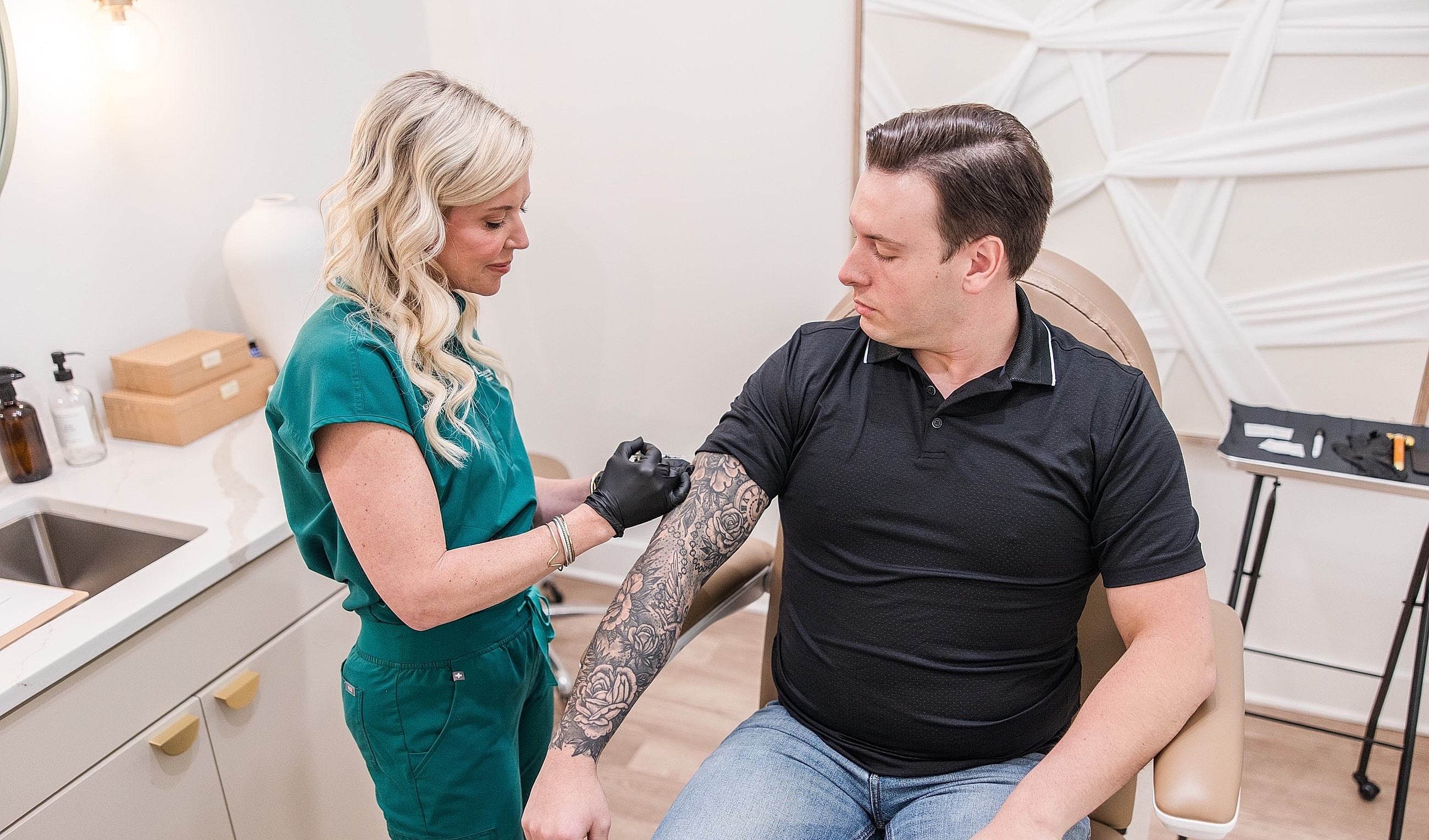
Bioidentical hormone replacement therapy (BHRT) in St. Johns at 4wellness is part of our integrated wellness approach, designed for patients who want more than a quick fix. Your 4wellness specialist looks at sleep, energy, mood, weight, and sexual health to see how hormonal shifts may be affecting your day-to-day life. From there, we create a personalized BHRT plan that works alongside lifestyle changes and other services to support long-term vitality.
BHRT uses bioidentical hormones, which are structurally similar to the hormones your body already makes. At our practice, BHRT is typically delivered through tiny pellets placed under the skin for steady, consistent dosing over time.
The pellet insertion itself is a brief in-office visit, and most patients return to normal routines the same day. You may be asked to limit heavy exercise or pressure on the area for a few days while the site heals.
Many patients begin noticing changes in energy, sleep, or mood within a few weeks, with more complete symptom improvement developing over several months. Your specialist monitors labs and symptoms to fine-tune dosing as your body responds.
Pellets are designed to last several months, so most patients return two to four times per year for re-insertion. The exact schedule depends on your hormone levels, goals, and how quickly your body metabolizes the pellets.

Bioidentical hormone replacement therapy (BHRT) uses plant-derived hormones that closely match the structure of the hormones your body naturally produces. When estrogen, progesterone, or testosterone decline or become imbalanced, you may notice fatigue, weight changes, brain fog, low libido, or mood shifts. BHRT aims to restore levels to a healthy range, helping support metabolism, cardiovascular health, bone strength, sexual function, and emotional well-being under the guidance of a trained medical provider like the ones at 4wellness.
Several key hormones work together to regulate how you feel, function, and age. When these become too low or out of balance, symptoms often appear gradually.
BHRT focuses on carefully replacing or balancing these hormones using bioidentical formulations, with dosing guided by both lab values and your reported symptoms.
BHRT pellets are tiny cylinders, about the size of a grain of rice, that contain customized doses of bioidentical hormones. Your specialist places the pellets just under the skin, usually in the upper buttock or hip area, through a small opening using a local anesthetic.
Once in place, the pellets slowly release hormones into your bloodstream, providing steady levels over several months and avoiding the daily ups and downs that can occur with pills or creams.


Women’s BHRT pellet plans are tailored to address symptoms related to perimenopause, menopause, or other hormone shifts, such as hot flashes, sleep disruption, low libido, or mood changes. Your provider will outline how often pellets are typically placed, what is included in your visits, and how follow-up lab work is handled so you understand the full investment.

Men’s BHRT pellet therapy often focuses on low testosterone symptoms, including decreased energy, reduced muscle mass, and diminished sexual function. Your specialist will discuss recommended dosing, expected pellet lifespan, and how ongoing monitoring works, giving you a clear picture of both the clinical plan and the financial commitment.


Your BHRT experience begins with an in-depth consultation and lab testing. Your specialist reviews your health history, current medications, symptoms, and goals. Blood work is ordered to measure key hormones and related markers. Once results are back, you meet to review findings, discuss whether BHRT is appropriate, and map out a personalized treatment plan.

Pellet placement is performed in the office and usually takes only a few minutes. After numbing the skin, your specialist makes a small opening, inserts the pellets, and applies a bandage. You receive simple aftercare instructions and can typically resume most daily activities right away.

As the pellets release hormones, your provider checks in to see how you are feeling and may repeat labs to confirm your levels. If needed, dosing can be adjusted at future pellet appointments to better match your body’s response and symptom relief.
Hormone imbalance can show up in many ways, and BHRT may be considered as part of a broader treatment plan for certain symptoms and conditions. Your specialist will evaluate whether hormone therapy is appropriate for you.
BHRT is not right for everyone, but for carefully selected patients, it can be one tool to help address hormone-related concerns.

“When we correct hormone imbalances safely and thoughtfully, patients often tell us they feel more like themselves again. The goal is not to chase a perfect number on a lab report, but to support overall health, comfort, and quality of life while monitoring you closely over time.”
BHRT may offer relief for people whose symptoms are clearly linked to hormone changes. Patients often report improvements in energy, mental clarity, sleep, and sexual desire as hormone levels stabilize. Some individuals also notice easier weight management, better exercise tolerance, and more stable moods. Your specialist will explain which benefits are realistic for your situation and how BHRT fits into a broader plan that can include nutrition, movement, and other wellness services.
Balanced hormones can support more consistent daytime energy and clearer thinking. Many patients describe fewer afternoon crashes, less brain fog, and a greater ability to stay productive and engaged throughout the day.
Estrogen, progesterone, and testosterone all play roles in mood regulation and sleep quality. When levels are optimized, some patients experience fewer mood swings, less irritability, and more restful sleep, which in turn supports overall resilience and well-being.
Low libido, discomfort with intimacy, or difficulty with arousal can be related to hormone shifts. BHRT may help restore sexual desire and comfort for some patients by improving vaginal or genital tissue health, increasing lubrication, and supporting overall sexual function.
Hormones influence how your body builds muscle and stores fat. With more balanced levels, some patients find it easier to maintain lean muscle mass, respond to strength training, and manage weight when combined with healthy lifestyle habits.
Research suggests that appropriate hormone replacement may support bone density and other aspects of long-term health for certain patients. Your provider will review potential risks and benefits in the context of your personal and family medical history.
No two BHRT plans or outcomes are exactly alike. Your response will depend on your baseline hormone levels, overall health, and adherence to the treatment plan. Regular follow-up visits and lab checks help your specialist tailor therapy to your changing needs.

Good candidates for BHRT are adults with documented hormone imbalances and symptoms that significantly affect quality of life, such as hot flashes, low libido, fatigue, or sleep disruption. Ideal patients are willing to complete lab testing, share a full medical history, and commit to regular follow-up so therapy can be monitored and adjusted safely.
BHRT may not be appropriate for individuals with certain cancers, uncontrolled cardiovascular disease, active liver disease, or a history of blood clots, among other conditions. Pregnant or breastfeeding patients should not receive hormone replacement. Your specialist will review your health background in detail to determine whether BHRT is a safe option or if alternative approaches would be better suited to your needs.


Recovery from pellet insertion is usually minimal. You may notice mild soreness, bruising, or redness at the site for a few days. Your provider will likely recommend keeping the area clean and dry, avoiding soaking in baths or pools, and limiting strenuous lower-body exercise until the small incision has healed.

Most patients begin to feel subtle shifts in energy, mood, or sleep within a few weeks, with more noticeable improvements often developing over 6–12 weeks as hormone levels stabilize. Your specialist will schedule follow-up visits and labs to track your response and plan your next pellet placement when levels start to decline.
BHRT at our St. Johns location is delivered by experienced 4wellness specialists who prioritize safety, education, and personalization. Instead of simply treating lab numbers, we look at how you feel, how you live, and what you want from therapy.
Your BHRT plan is integrated with other services as needed, from skincare and injectables to weight management and IV therapy, so your care feels cohesive and supported at every step.
BHRT can be safe for appropriately selected patients when it is prescribed, dosed, and monitored by a qualified medical provider. Like any hormone therapy, it carries potential risks, including changes in blood counts, mood, or cardiovascular and breast health, depending on your personal history. Your specialist will review known risks, screening recommendations, and warning signs to watch for before you begin.
Most patients receive pellets every three to six months, depending on which hormones are being replaced and how quickly their bodies metabolize them. Your provider will track your symptoms and lab values to decide when it is time for the next insertion.
Traditional hormone replacement therapy (HRT) often uses synthetic or animal-derived hormones and is commonly delivered as pills, patches, or creams. BHRT uses bioidentical hormones that are structurally similar to your own and can be customized in pellet form for more consistent delivery. Your provider will explain the pros and cons of each approach so you can make an informed decision.
Yes, lab testing is essential before and during BHRT. Baseline labs help confirm whether hormone imbalance is present and guide initial dosing. Follow-up labs allow your provider to monitor levels, adjust treatment, and watch for any changes that may require additional evaluation.
The length of BHRT is different for everyone. Some patients use hormone therapy for a defined period to get through a challenging phase, while others choose longer-term treatment under close medical supervision. Your specialist will revisit the risks, benefits, and your goals regularly so you can decide together how long to continue.
Possible side effects of BHRT can include breast tenderness, acne, fluid retention, mood changes, or spotting, especially early in treatment or after dose adjustments. Serious complications are less common but can occur. You will receive clear instructions on when to call the office and when to seek urgent care.
BHRT is not a weight-loss drug, but for some patients, correcting hormone imbalances can make it easier to respond to healthy nutrition and exercise. Your provider may recommend pairing BHRT with structured weight management or other wellness services if body composition is a key concern.