Under-Eye Filler
Lexington, KY


You can be sleeping well and still have shadows beneath your eyes that make you look more tired than you feel. For some patients, the issue comes from a natural hollow between the lower eyelid and cheek rather than a lack of sleep. Under-eye filler at 4esthetics Lounge in Lexington, KY can restore subtle volume in that area, soften the shadow created by the hollow, and create a smoother transition into the cheek without changing the character of your face.
Because the under-eye area is delicate, good results depend as much on patient selection as they do on the filler itself. Sometimes filler makes sense. Sometimes the better answer is treating the cheek, skin quality, pigmentation, or another concern first.

Under-eye filler is an injectable treatment that uses hyaluronic acid dermal filler to add controlled volume beneath the eyes, soften infraorbital hollowing, and create a smoother transition between the lower eyelid and upper cheek.
Hyaluronic acid is a substance found naturally in the body that attracts water and adds volume when formulated as an injectable gel. FDA-approved hyaluronic acid fillers are available specifically for infraorbital hollowing, although the exact product used should be selected according to the patient’s anatomy and treatment plan.
Under-Eye Filler | Details |
|---|---|
| Best For | True under-eye hollowing, tear troughs, and shadowing caused by volume loss |
| Treatment Type | Hyaluronic acid dermal filler |
| Downtime | Usually minimal, although swelling and bruising can occur |
| Comfort | Brief pressure, pinching, or tenderness during treatment |
| Results | Visible soon after treatment, with the area settling as swelling improves |
| Longevity | Varies by product and patient; FDA data for Restylane Eyelight reports results lasting up to 12 months in studied patients. |
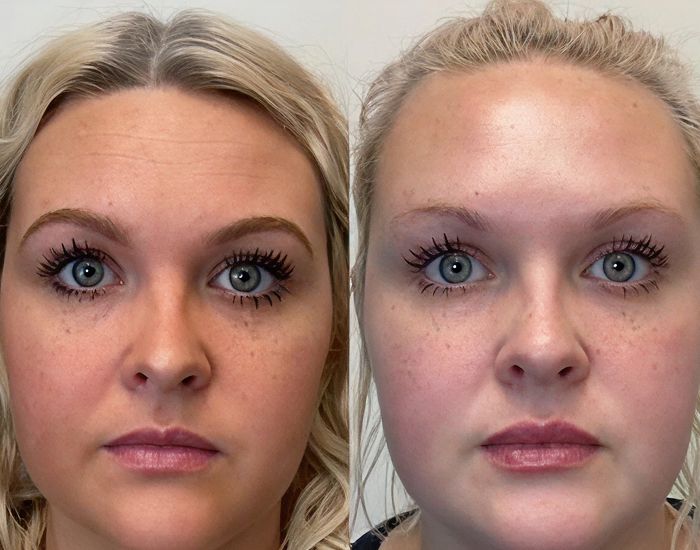
Under-eye filler works best when the concern is a true depression or hollow beneath the lower eyelid. Adding a small amount of volume can soften the tear trough and reduce the shadow that makes the area appear darker.
It is important to separate hollowing from other under-eye concerns. Pigmentation, prominent blood vessels, fluid retention, significant under-eye bags, and loose or crepey skin may create a tired appearance without being caused by lost volume. Adding filler to the wrong concern can make the area look heavier rather than better.
During your consultation, we look at what is actually creating the shadow before recommending treatment.
The tear trough sits where the lower eyelid transitions into the upper cheek. Genetics can make this groove visible at a young age, while changes in facial fat, bone support, and skin quality can make it more noticeable over time.
Hyaluronic acid filler adds support within this depression so light moves across the area more evenly. In some patients, supporting the cheek first can also improve the transition beneath the eye and reduce how much filler is needed directly in the tear trough.
The goal is subtle correction. This is one area where more product does not automatically create a better result.
For the right patient, under-eye filler can make the eye area look smoother and more rested without surgery.
Potential benefits include:

Good candidates usually have visible hollowing beneath the eyes that creates a groove or shadow. Skin quality, cheek support, previous filler, facial anatomy, and the degree of volume loss all influence whether filler is likely to help.
Patients should also be in good general health and have realistic expectations about what filler can change.
Under-eye filler may not be the best choice if your main concern is significant puffiness, prominent under-eye bags, fluid retention, pigmentation, or substantial skin laxity. Active infection, certain allergies, pregnancy, breastfeeding, medications, and previous filler should also be discussed before treatment.
Rare but serious filler complications can occur if product enters a blood vessel, including tissue injury and vision impairment. The FDA recommends choosing a licensed healthcare provider with appropriate training and discussing the risks associated with the specific injection site.

Your appointment begins with a facial assessment rather than the injection itself. We look at the tear trough, lower eyelid, cheek support, skin quality, and how the area appears from different angles.
If filler is appropriate, the treatment area is cleansed and your injector places a conservative amount of product beneath the eye. The exact technique depends on your anatomy and the product selected. You may feel pressure or brief pinching, but most appointments are relatively quick.
We prefer to under-correct and reassess rather than place unnecessary volume in a delicate area.
Swelling, tenderness, redness, or bruising can occur after treatment. The under-eye area can hold swelling more visibly than other parts of the face, so the first few days are not always representative of the final result.
Avoid rubbing or pressing on the treated area unless your provider specifically instructs you to do so. Follow your individualized aftercare guidance and contact the practice promptly if you experience unusual or increasing pain, blanching or changes in skin color, visual symptoms, or other concerning changes.

Added volume is visible immediately, but swelling can temporarily change how the area looks. As the tissue settles, the transition between the lower eyelid and cheek should become easier to evaluate.
A follow-up appointment may be recommended before deciding whether additional correction is appropriate.
Longevity varies according to the filler used, anatomy, metabolism, treatment amount, and individual response. Restylane Eyelight, which is FDA approved for infraorbital hollowing in adults over 21, demonstrated results lasting up to 12 months in clinical study data.
Your maintenance plan should be based on how your own result changes over time rather than automatically repeating filler on a fixed schedule.
Filler is strongest when volume loss is creating the concern. Other treatments can make more sense when the issue comes from the skin itself.
PRF may be considered when the goal is regenerative support and improvement in thin under-eye skin. Laser resurfacing can address texture, fine lines, and selected pigmentation concerns. RF microneedling may help improve skin quality and mild laxity, while cheek filler can sometimes improve under-eye support without placing much product directly beneath the eye.
Some patients benefit from combining approaches over time.
At 4esthetics Lounge, under-eye treatment begins with deciding whether filler belongs there at all. Our nurse practitioner-led team looks at your facial anatomy, cheek support, skin quality, volume loss, and treatment history before recommending an injectable plan.
That level of restraint is incredibly important in an area where a subtle change can go a long way.
Schedule your consultation at 4esthetics Lounge in Lexington, KY, to find out which under-eye treatment makes the most sense for you.
It can help when darkness is caused by shadowing from a tear trough or hollow. Filler does not directly treat pigment-based dark circles, visible vessels, or every cause of discoloration.
Yes, in some patients. If puffiness or prominent under-eye bags are already present, adding volume may make the area appear heavier. Patient selection is especially important here.
Most patients feel brief pressure or pinching. Products containing lidocaine and other comfort measures can make treatment easier to tolerate.
There is no standard amount. The right volume depends on your anatomy, degree of hollowing, cheek support, and previous treatment. Conservative placement is usually preferred.
Sometimes. Restoring support in the upper cheek may soften the lower eyelid-to-cheek transition and reduce the amount of filler needed directly beneath the eye.
Hyaluronic acid fillers can generally be broken down with hyaluronidase when clinically appropriate. Dissolving filler is still a medical treatment and should be performed by an experienced provider.
Depending on the cause of your concern, your provider may discuss options such as PRF, cheek filler, RF microneedling, laser resurfacing, or skincare instead.

859-334-0484
Mon & Wed: 10 AM - 7 PM
Tues/Thurs & Fri: 10 AM - 5 PM
Sat: 10 AM - 4 PM ( 2 Saturdays a month)
Sun: Closed